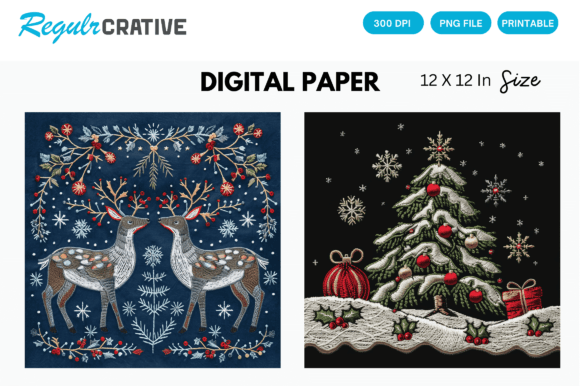
Christmas Tree Embroidery Digital Paper
As an embroidery designer who spends half the year prepping for craft fairs and the other half refining patterns, I look at a design file and immediately ask: Will this sell? It is not just about whether the stitch path is clean or the color palette is pretty. It is about whether the finished product stops a browser in their tracks and compels them to pull out their wallet. When I first reviewed the Christmas Tree Embroidery Digital Paper, my initial reaction was one of cautious optimism. The description mentions it is inspired by classic floral patterns, which suggests a vintage or cottage-core aesthetic rather than a stark, modern geometric tree. This distinction matters immensely when you are trying to build a brand identity for your handmade shop.
First Impressions and Visual Appeal
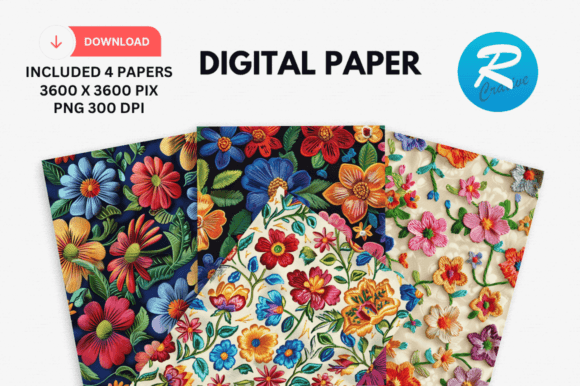
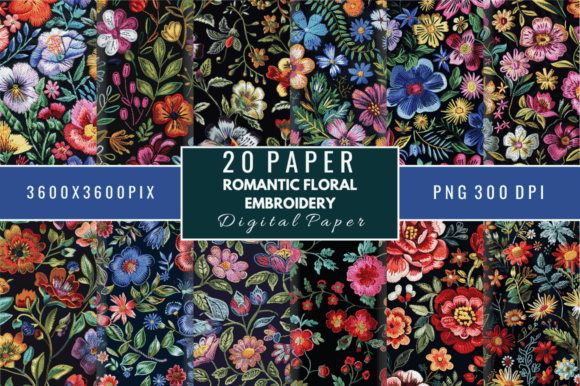
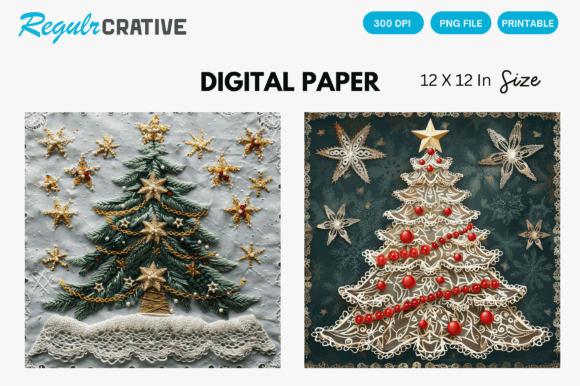
The term "Digital Paper" can be misleading if you are strictly looking for a .pes or .dst machine embroidery file. However, in the context of modern crafting, these assets often serve as the foundational graphic that gets translated into fabric or used directly in digital planning. If we treat this as a machine embroidery design concept derived from this paper pattern, the visual appeal hinges on its ability to read clearly from three feet away. Classic floral patterns usually imply a dense, lush composition. For a holiday market, this translates to a feeling of abundance and warmth. It feels festive, decorative, and premium. It avoids the cliché of bright reds and greens in favor of something more sophisticated—perhaps muted botanicals mixed with evergreen tones. This sophistication is exactly what separates a boutique maker from a mass-market producer.
When customers walk up to your booth, they are scanning dozens of items. A design that looks like a busy, chaotic mess will be ignored. But a design with a clear focal point, even if it is intricate, draws the eye. The Christmas Tree Embroidery Digital Paper likely offers that balance. It provides enough detail to reward a closer look but enough structure to be recognized instantly as a holiday motif. This is crucial for Etsy seller listings as well; your thumbnail image must communicate the vibe before the customer clicks through. A clean, elegant floral-tree hybrid does exactly that.
Product Application and Versatility
Where does this design truly shine? In my experience, the most successful craft fair products are those that utilize the design in ways that feel both practical and personal. Let us break down how this asset performs across different mediums.
- Tote Bags: A canvas tote is a staple. Placing a centered tote bag design featuring this floral tree creates a beautiful contrast between the rugged texture of the cotton and the delicate nature of the embroidery. It elevates a basic item into a gift-worthy piece.
- Aprons and Tea Towels: Kitchen linens are high-volume sellers. For apron embroidery, placing the design near the pocket or as a central chest motif works best. On tea towels, the floral elements can mimic the weave of the fabric, creating a subtle, textured look. This is perfect for holiday hostess gifts.
- Patches and Caps: If the design allows for a clean border, it translates beautifully to an embroidered patch. These are versatile; customers can iron them onto backpacks, denim jackets, or beanies. For caps, ensure the design fits within the standard curvature without distorting the floral details.
- Pillow Covers and Pouches: Small home decor items allow for larger, more intricate designs because the scale is intimate. A pillow cover featuring this pattern becomes a statement piece for holiday mantels. Similarly, small fabric pouches for makeup or tech accessories offer a quick-turnaround product that still feels luxurious.
For digital sellers, this digital embroidery file concept can also be adapted into printable mockups. You can use the pattern to create backgrounds for your listing photos, giving your small shop product line a cohesive, branded look that stands out in a crowded marketplace.
Production Practicalities and Technical Considerations
Being an experienced designer means anticipating where production might go wrong. Not all designs are created equal, and understanding the technical limitations is key to maintaining quality control. Here are the critical factors to evaluate before you commit to batch production.
Stitch Density and Detail
Classic floral patterns can sometimes suffer from overly dense stitching. If the stitch density is too high, the fabric may pucker, especially on lighter materials like tea towels or thin cotton blends. You must inspect the design to ensure there is adequate negative space. Tiny details, such as individual petals or fine branches, can get lost if the thread colors do not provide enough contrast against the base fabric. Always test the design on scrap fabric that matches your final product material.
Hoop Size and Placement
Confirm the recommended hoop size for this design. If it requires a large hoop, it limits the types of garments you can embroider. A design that fits comfortably in a 4x4 or 5x7 hoop offers more flexibility for smaller items like pouches and patches. Additionally, consider the placement. Does the design sit awkwardly on the curve of a cap? Does it align poorly with the seam of a tote bag? Planning your layout beforehand saves time and reduces waste.
Fabric Texture and Stabilizer Choice
The interaction between the thread and the fabric is paramount. On textured fabrics like linen or heavy canvas, the needle may struggle to penetrate consistently, leading to skipped stitches. Conversely, on slippery satin-like fabrics, the design may shift during stitching. Using the right stabilizer is non-negotiable. For stable woven fabrics, a cut-away stabilizer ensures longevity. For knits or stretchy materials, a tear-away or water-soluble backing might be necessary to prevent distortion. Never skip the step of testing your stabilizer choice with your specific fabric.
Thread Contrast and Colorfastness
Ensure your thread colors pop against your chosen fabric. Dark fabrics require metallic or light-colored threads to make the design visible, while light fabrics benefit from vibrant, saturated hues. Also, verify that the threads you select are colorfast, especially for items like aprons and tea towels that will undergo frequent washing. Nothing kills repeat business faster than a design that fades or bleeds after the first wash.
Marketing and Sales Strategy
Once you have perfected the physical product, the next challenge is selling it. The Christmas Tree Embroidery Digital Paper lends itself well to storytelling. Highlight the "classic floral" inspiration in your descriptions. Use words like "vintage-inspired," "botanical elegance," and "handcrafted charm." For your booth display, group similar items together—a tote next to a matching apron—to show the versatility of the design. This encourages customers to buy multiple items, increasing your average order value.
Photography is your most powerful tool. Capture close-up shots that highlight the texture of the stitches and the quality of the thread. Show the product in use, perhaps a tote bag filled with holiday treats or an apron worn while baking cookies. This helps customers visualize the item in their own homes, bridging the gap between seeing a product and wanting to own it.
Final Verdict
The Christmas Tree Embroidery Digital Paper represents a strong opportunity for makers looking to add a touch of elegance to their holiday inventory. Its classic floral roots provide a timeless appeal that resonates with a wide audience. However, success depends on careful execution. By paying attention to stitch density, fabric choice, and professional presentation, you can transform this digital asset into a tangible, desirable finished product. Remember to check the specific licensing terms before engaging in commercial embroidery sales. With the right preparation, this design can become a standout feature in your booth and a favorite among your customers.